Generative AI for Enterprise Transformation: Use Cases, Benefits & Strategic Impact
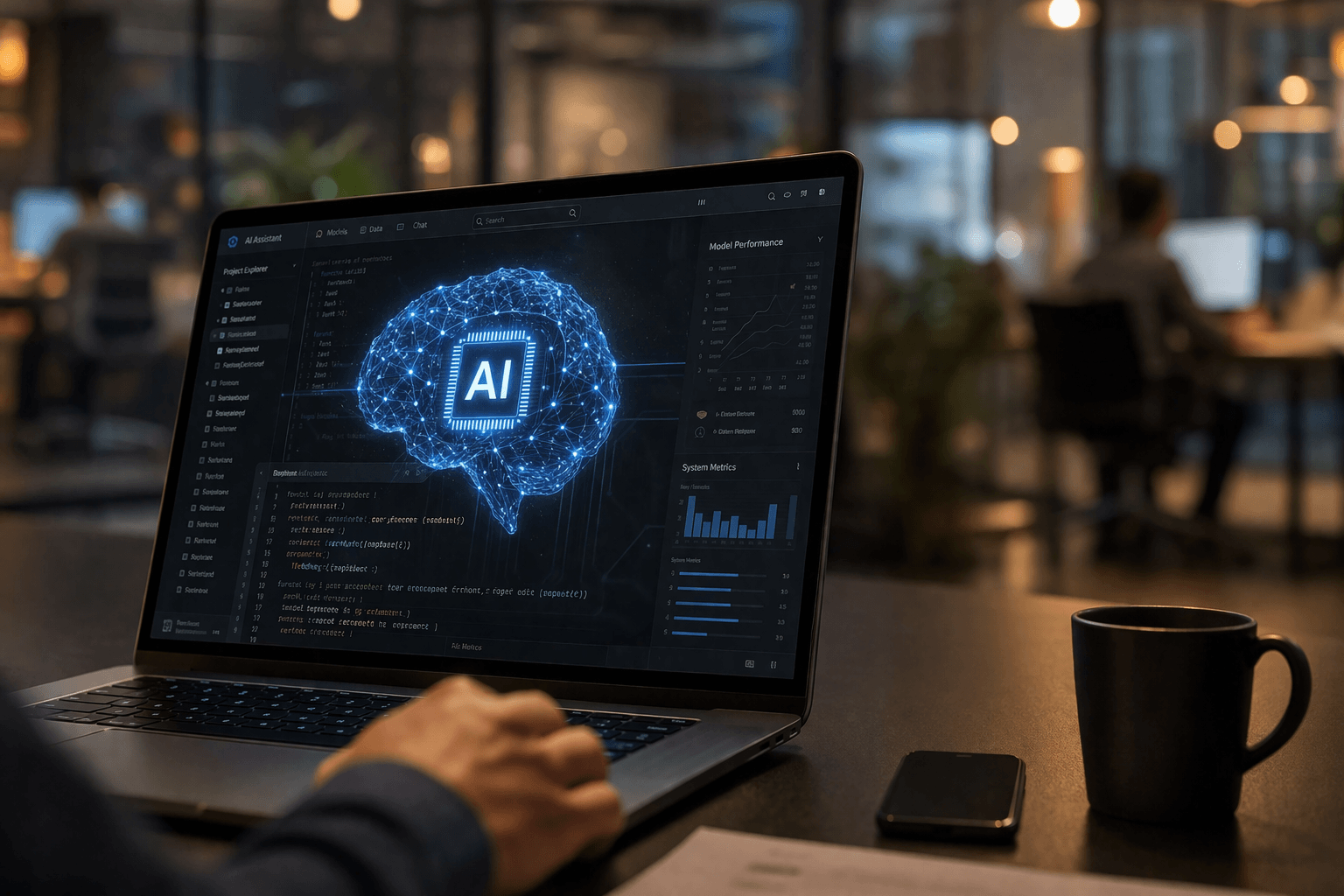 Digital Transformation
Introduction: The Rise of Generative AI in Enterprises
The rapid evolution of Artificial Intelligence is redefining how enterprises operate, innovate, and compete. Among these advancements, Generative AI for enterprise transformation stands out as a game-changer.
From creating content and automating workflows to enabling hyper-personalization, generative AI is helping businesses unlock new levels of efficiency and innovation.
As organizations adopt modern enterprise technology solutions they need to integrate AI into core business processes is no longer optional-.it’s strategic.
What is Generative AI and Why It Matters for Enterprises
Generative AI refers to advanced AI models capable of producing new content such as text, images, code, and even video. Unlike traditional AI systems that analyze data, generative AI creates entirely new outputs based on learned patterns.
Why it matters:
Enables faster decision-making
Automates creative and operational tasks
Enhances customer engagement
Drives innovation at scale
Key Use Cases of Generative AI in Enterprises
Marketing & Sales Transformation
Generative AI is revolutionizing how businesses approach marketing and customer engagement.
Key applications:
Personalized marketing campaigns
AI-generated content for social media
Product simulations for immersive experiences
Organizations leveraging AI are seeing measurable improvements in engagement by enhancing customer experience through AI.
Product Development & Innovation
AI accelerates product development by enabling rapid ideation and experimentation.
Key benefits:
AI-generated product concepts
Faster prototyping
Simulation-based feature optimization
AI-Powered Customer Service
Customer expectations are higher than ever. Generative AI enables intelligent, human-like interactions at scale.
Capabilities:
Conversational AI chatbots
Automated support systems
Personalized responses
These solutions are transforming support functions into AI-powered customer engagement solutions.
Research & Development Acceleration
Generative AI is unlocking new possibilities in R&D.
Key applications:
Synthetic data generation
Accelerated scientific research
Advanced simulations
Core Capabilities of Generative AI
Generative AI delivers value through several core capabilities:
Content Creation: Automated generation of marketing content, product descriptions, and code
Design Innovation: Creation of new product concepts and prototypes
Personalization: Tailored user experiences across digital platforms
Data Augmentation: Synthetic data generation for improved AI models
Businesses can scale these capabilities using AI-driven automation services enabling seamless integration across operations.
Strategic Benefits of Generative AI for Enterprises
Organizations adopting generative AI are gaining a competitive edge through:
Innovation at Scale
Hyper-Personalization
Operational Efficiency
Competitive Advantage
Challenges and Considerations
While the benefits are significant, enterprises must address key challenges:
Bias and fairness
Explainability and transparency
Ethical considerations
Implementing Generative AI in Your Organization
Successful adoption requires a structured approach:
Identify high-impact use cases
Integrate with existing systems
Train teams and build AI readiness
Monitor and optimize performance
Organizations can accelerate this journey with QA consulting and implementation support ensuring scalable and secure deployment.
The Future of Generative AI in Enterprise Transformation
Generative AI continues to evolve rapidly, moving beyond isolated use cases to become deeply embedded within enterprise ecosystems. As organizations accelerate digital transformation, generative AI is playing a critical role in reshaping how businesses operate, innovate, and compete.
In the coming years, enterprises will see tighter integration of generative AI with core systems such as ERP, CRM, and supply chain platforms. This integration will enable real-time decision-making, predictive insights, and intelligent automation across end-to-end business processes.
One of the most significant shifts will be the rise of AI-driven enterprises, where generative AI supports not only operational efficiency but also strategic initiatives. From autonomous content creation and advanced simulations to AI-assisted product design and hyper-personalized customer experiences, the scope of innovation will expand significantly.
Additionally, generative AI will enhance collaboration between humans and machines. Rather than replacing human expertise, it will augment decision-making, allowing teams to focus on higher-value, creative, and strategic tasks.
However, as adoption grows, enterprises will also prioritize responsible AI practices. Governance, data security, ethical AI usage, and model transparency will become essential components of enterprise AI strategies. Ultimately, the future of generative AI in enterprise transformation lies in its ability to seamlessly integrate intelligence across every layer of the organization-unlocking new efficiencies, accelerating innovation, and creating sustainable competitive advantage in an increasingly digital world.
Conclusion: Turning AI Potential into Business Value
Generative AI is no longer a future concept-it is a present-day driver of enterprise transformation. From improving operational efficiency to enabling innovation at scale, its impact is both immediate and long-term. Organizations that strategically adopt generative AI today will be better positioned to lead in an increasingly competitive and digital-first landscape. By aligning the right use cases, technology, and governance frameworks, businesses can unlock measurable value and sustainable growth.Generative AI represents a turning point in enterprise technology. It enables organizations to innovate faster, personalize experiences, and operate more efficiently.
Organizations ready to embrace AI can benefit from enterprise AI implementation services to accelerate transformation and achieve sustainable growth.