
The modern workforce is no longer confined to traditional office spaces. As hybrid and remote work models become the norm, businesses need robust digital workplace solutions that enable seamless collaboration, productivity, and employee engagement regardless of location. Organisations that invest in digital workplace transformation today are positioning themselves for long-term success in an increasingly distributed work environment.
According to recent research, 74% of Australian organisations have adopted hybrid work models since 2020, with projections indicating this figure will reach 83% by 2026. The shift to hybrid work isn't temporary-it's a fundamental change in how we work. Companies must adapt their technology infrastructure to support employees who split time between home and office, while maintaining the same level of efficiency and connectivity that on-site teams enjoy. This transformation extends beyond simply providing laptops and video conferencing tools. It requires a holistic approach that reimagines how teams communicate, collaborate, and maintain company culture across physical and digital boundaries.
Key Takeaways
Digital workplace solutions integrate communication, collaboration, and productivity tools into unified platforms that support hybrid and remote teams effectively. The global digital workplace market is projected to reach USD $72.2 billion by 2026, growing at 21.3% annually.
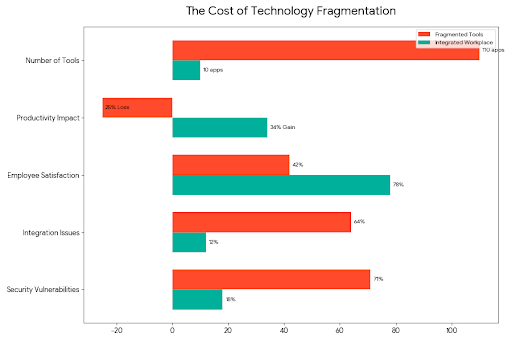
Cloud-based collaboration tools eliminate geographical barriers and enable real-time teamwork across distributed workforces. Organisations using integrated platforms report 34% higher productivity compared to those with fragmented tools.
Strategic digital workplace transformation requires careful planning, the right technology stack, and ongoing support to maximise adoption and ROI. Early adopters have seen average cost savings of 18-25% through reduced real estate and improved operational efficiency.
Why Digital Workplace Solutions Matter for Hybrid Teams
Digital workplace solutions have become essential infrastructure for modern businesses. These integrated platforms bring together voice, video, messaging, file sharing, and project management into cohesive ecosystems that mirror the connectivity of physical offices.
Digital workplace solutions create virtual environments where distance becomes irrelevant, enabling seamless collaboration across locations and time zones.
Industry Statistics:
67% of Australian employees now work in hybrid arrangements, up from 12% in 2019
89% of IT leaders report digital workplace investments as a top priority for 2025-2026
Organisations with mature strategies experience 43% less employee turnover
Remote collaboration tools have reduced meeting time by 27% while improving decision-making speed
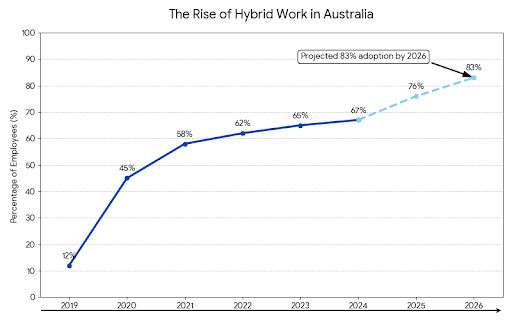
Well-implemented digital workplace transformation enhances employee experience, reduces IT complexity, and improves security. Organisations report that employees with modern collaboration tools are more engaged and productive. Consider a project team across three time zones-without integrated platforms, they juggle multiple tools creating version control issues. A unified digital workplace provides a single source of truth for all project communications.
Core Components of Effective Hybrid Workplace Solutions
Building a future-ready digital workplace demands a comprehensive approach addressing communication, collaboration, security, and employee well-being.
Unified Communication Platforms: Voice, video, and messaging should work seamlessly across all devices. Cloud-based collaboration tools provide consistency, letting teams start conversations on one device and continue on another effortlessly. Studies show unified communication platforms reduce communication delays by 52% and improve project completion rates by 38%.
Secure Access and Identity Management: Hybrid workplace solutions must include robust authentication, secure VPN access, and comprehensive endpoint protection. With cyber attacks on remote workers increasing by 238% since 2020, security remains paramount for organisations.
Collaboration and Document Management: Teams need co-editing capabilities, screen sharing, and version control without email chaos. Modern platforms integrate document management with communication tools for contextual discussions. Organisations using integrated document collaboration report 41% faster project turnaround times.
Employee Experience Tools: Successful implementations help remote employees connect with company culture and receive recognition. Virtual town halls and social collaboration spaces maintain human connection. Research indicates 78% of employees in well-designed digital workplaces report higher job satisfaction.
Organisations investing in intelligent automation further enhance digital workplaces by automating routine tasks and providing AI-powered assistance.
Overcoming Common Digital Workplace Challenges
The transition to a digital workplace rarely happens without obstacles. Understanding these challenges helps organisations prepare effectively.
Resistance to Change: 58% of digital transformation initiatives face employee resistance, with 42% citing lack of training as the primary concern. Successful transformation addresses concerns through clear communication and comprehensive training. When executives actively use new platforms, adoption rates increase by 67%.
Technology Fragmentation: The average enterprise uses 110 different SaaS applications, leading to data silos and 20-30% efficiency losses. The solution involves consolidating platforms and choosing systems that integrate well.
Bandwidth and Connectivity Issues: 23% of Australian remote workers report connectivity challenges affecting productivity. Solutions need offline functionality, compressed video options, and asynchronous collaboration features.
Security and Compliance: Data breaches cost Australian businesses an average of $3.35 million per incident in 2024. Platforms must include encryption, multi-factor authentication, and device management.
Key Challenge Statistics:
64% of organisations cite integration complexity as a major barrier
$1.2 trillion lost globally annually due to poor workplace technology
71% of security breaches involve remote access vulnerabilities
49% of failed digital transformations lack adequate change management
Partnering with experienced professional services providers helps organisations navigate these challenges effectively.
Implementing Digital Workplace Transformation Successfully
Creating a future-ready digital workplace requires strategic planning. Research shows 70% of projects fail due to inadequate planning, while structured approaches achieve 3.5x higher ROI.
Start with Assessment and Strategy: Conduct surveys and workflow analyses to inform technology selection. Organisations investing 15-20% of their budget in planning report 56% higher success rates.
Choose Scalable Cloud-Based Collaboration Tools: Cloud platforms offer unmatched scalability without infrastructure overhauls. Look for open APIs and mobile-first designs. Cloud solutions reduce IT costs by 35% while improving availability to 99.9%.
Prioritise Training and Change Management: Show employees how tools solve their pain points. Organisations investing in comprehensive training see 82% faster adoption and 44% higher feature utilisation.
Implement in Phases: Start with core communication tools, then add collaboration features and advanced capabilities. Phased implementations reduce failure risk by 61% compared to "big bang" approaches.
Expected ROI Timeline:
Months 1-3: Foundation building, 5-10% efficiency gains
Months 4-6: Increased adoption, 15-20% productivity improvement
Months 7-12: Full integration, 25-35% overall enhancement
Year 2+: Sustained benefits, 30-45% cumulative ROI
Organisations investing in customer experience management discover parallels with employee experience—understanding needs, removing friction, and continuously improving.
Future Trends Shaping the Digital Workplace
The digital workplace continues evolving as technologies mature and work patterns shift. Organisations should watch several key trends that will define the next generation of workplace technology.
Artificial Intelligence Integration: AI is moving beyond chatbots into sophisticated applications—intelligent meeting assistants, predictive analytics surfacing relevant information, and automated workflows handling routine tasks. The AI in workplace market is expected to reach $29.4 billion by 2027, growing at 32.5% annually. Digital workplace solutions will become increasingly proactive, with 85% of organisations planning to integrate AI-powered features by 2026.
Extended Reality Collaboration: Virtual and augmented reality technologies promise immersive remote collaboration. The XR workplace market is projected to grow from $1.8 billion in 2024 to $12.6 billion by 2028. Virtual meeting rooms and AR overlays for field guidance will eventually transform distributed team interactions, with early adopters reporting 40% improvement in remote training effectiveness.
Enhanced Security: As cyber threats grow sophisticated, expect zero-trust architectures to become standard. Investment in workplace cybersecurity is forecast to increase by 58% over the next three years. Privacy concerns will drive solutions balancing collaboration with data protection, particularly in regulated regions.
Sustainability Focus: Organisations increasingly consider environmental impact. Cloud-based collaboration tools typically have lower carbon footprints than on-premises systems, while reduced commuting contributes to sustainability goals. Research shows hybrid work models reduce carbon emissions by an average of 54% per employee annually, with digital workplace solutions enabling these environmental benefits.
Conclusion
Building a future-ready digital workplace isn't about adopting the latest technology-it's about creating environments where employees can do their best work regardless of location. Digital workplace solutions that integrate communication, collaboration, and productivity tools into seamless experiences will define successful organisations in the hybrid work era.
The statistics paint a clear picture: organisations with mature digital workplace strategies achieve 34% higher productivity, 43% better retention rates, and average cost savings of 18-25%. The transition requires investment, planning, and commitment to change management. However, organisations that embrace digital workplace transformation today position themselves for competitive advantage. They attract top talent who value flexibility, respond more quickly to market changes, and build resilience against disruption.
Whether you're just beginning your journey or looking to optimise existing hybrid workplace solutions, the key is taking action. Start by assessing current capabilities, involving employees in the planning process, and partnering with experienced providers who understand enterprise communication challenges. The future of work is here-make sure your digital workplace is ready for it.
Ready to transform your digital workplace?
Learn how VIS Global helps organisations implement cutting-edge collaboration and communication solutions tailored for hybrid and remote teams.